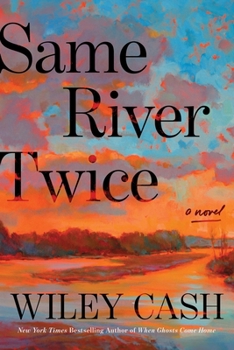
Full disclosure: this book is based in the rural surroundings of Wilmington, NC, about a 2-hr drive SE of the Raleigh area where I live. That means I’m partial (biased?) that it’ll be an interesting story. And having reviewed here an earlier Wiley Cash book (A Land More Kind Than Home), I think this’ll be a must-read book.
Same River Twice is a contemporary Southern novel about race, class, family history, and just who should tell stories about the past. Our story begins when human remains are discovered on the grounds of Bennett Place, a former rice plantation built primarily on the backs of enslaved people. The property’s new owner hopes to transform it into a historic landmark celebrating his own family’s heritage.
Aaron is a successful Black writer/university writer in residence who returns to the property because his family history is connected to the land. His grandfather once worked there, and Aaron is also searching for answers about his father’s disappearance.
Three complicated characters become intertwined by the discovery. 1. Jessica is a newly minted PhD in archeology struggling with enormous student-loan debt. She accepts a job managing the historic site and is now somewhat dependent on the wealthy benefactor. The discovery forces her to confront an ethical dilemma: protect her employer’s interests or pursue the truth about the remains? She must balance her historical scholarship vs. powerful people who want to control the plantation’s narrative.
2. The new owner pulls Kevin, the local DA, into the situation. He too is balancing two roles: public official and his own complicated family history. What he learns forces him to confront uncomfortable truths about race, power, and the legacy of the past. The novel also draws Kevin’s family and teenage daughter Amelia whose limited life experiences offer a more contemporary outlook on Southern life and the pressures faced by young people.
3. Aaron is the third character.
All drawn together because a skeleton dug up by the renovation crew has conspired to force these southern characters to face universal unresolved relationships in the South. Cash encourages us to see the remains not as museum trinkets. Rather the remains teach us about how the past can impact modern truths.
‘They’ say history is written by the winners of conflicts. In this case, who owns this narrative? No one really owns history or is allowed to interpret it with all its flaws and imperfections. Don’t expect any real black and white (figuratively speaking) resolution to Wilmington's secrets.
The primary three perspectives allow Cash to show us how race and class shape these three divergent characters. Or maybe not. Regardless of what a reader takes from the book, expect to benefit from this thoughtful Southern novel and whether the past should just stay buried.
ECD

No comments:
Post a Comment